Class Celebrations with Food Allergies: Help Everyone Take Part
An inclusive class celebration needs more than removing peanuts or asking a child at the last minute what they can eat. Confirm individual needs, ingredients, handling and adult responsibilities beforehand, and make shared activities part of the celebration so participation does not depend on eating the same snack.
An allergy-aware class celebration starts before the snacks are handed out. Adults need to understand individual requirements, check the food and know what to do if something goes wrong. “There probably aren't any peanuts” is not enough, and the serving table is not the place to start asking a child whether a snack is suitable.
This guide is for teachers and parents planning birthdays, festive activities or class parties. It is general education, not a way to diagnose allergies, test tolerance or decide medication. Where a student has an individual care plan from their healthcare team, parents and the school should put that plan into practice.
Confirm individual needs rather than guessing from a food's name
Food allergy involves the immune system. For susceptible people, even a small amount of the relevant allergen can cause a severe reaction. The Centre for Food Safety recommends obtaining students' allergy histories and accommodating individual dietary requirements. Centre for Food Safety: Food allergy
A broad question such as “Any foods to avoid?” may leave too much open to interpretation. Use the school's agreed channel to confirm the foods that need to be avoided, whether existing arrangements are current and whom to contact on the day. A single class-wide “safe snack list” cannot replace checking each student's needs.
Respect privacy during that conversation. Information belongs with the adults responsible for care, food preparation and the activity, not automatically with every classmate. Children can be told that different people need different foods without sharing a student's medical history or presenting them as a problem.
Keep ingredient information and the original packaging
Names such as “chocolate biscuit”, “vegan cake” or “plant-based milk” do not establish suitability for a particular student. Allergens extend beyond peanuts: examples include milk, eggs, fish, crustaceans, soya and cereals containing gluten. Allergens may also be present in sauces, fillings and other ingredients. Centre for Food Safety: Food allergy
Keep the packaging of prepacked snacks so the responsible adult can check the information. Avoid emptying different products onto one large platter and keeping only an attractive name card. Check the actual pack each time instead of relying on having bought the same brand before.
Food labels convey more than nutrition figures: they also communicate ingredients, allergens and handling instructions. If information is incomplete, unreadable or its source is unclear, ask the supplier. Until that question is resolved, do not describe the item as a verified option for the student's particular needs. Centre for Food Safety: Food Labelling and Nutrition Labelling
Not deliberately added is different from no cross-contact
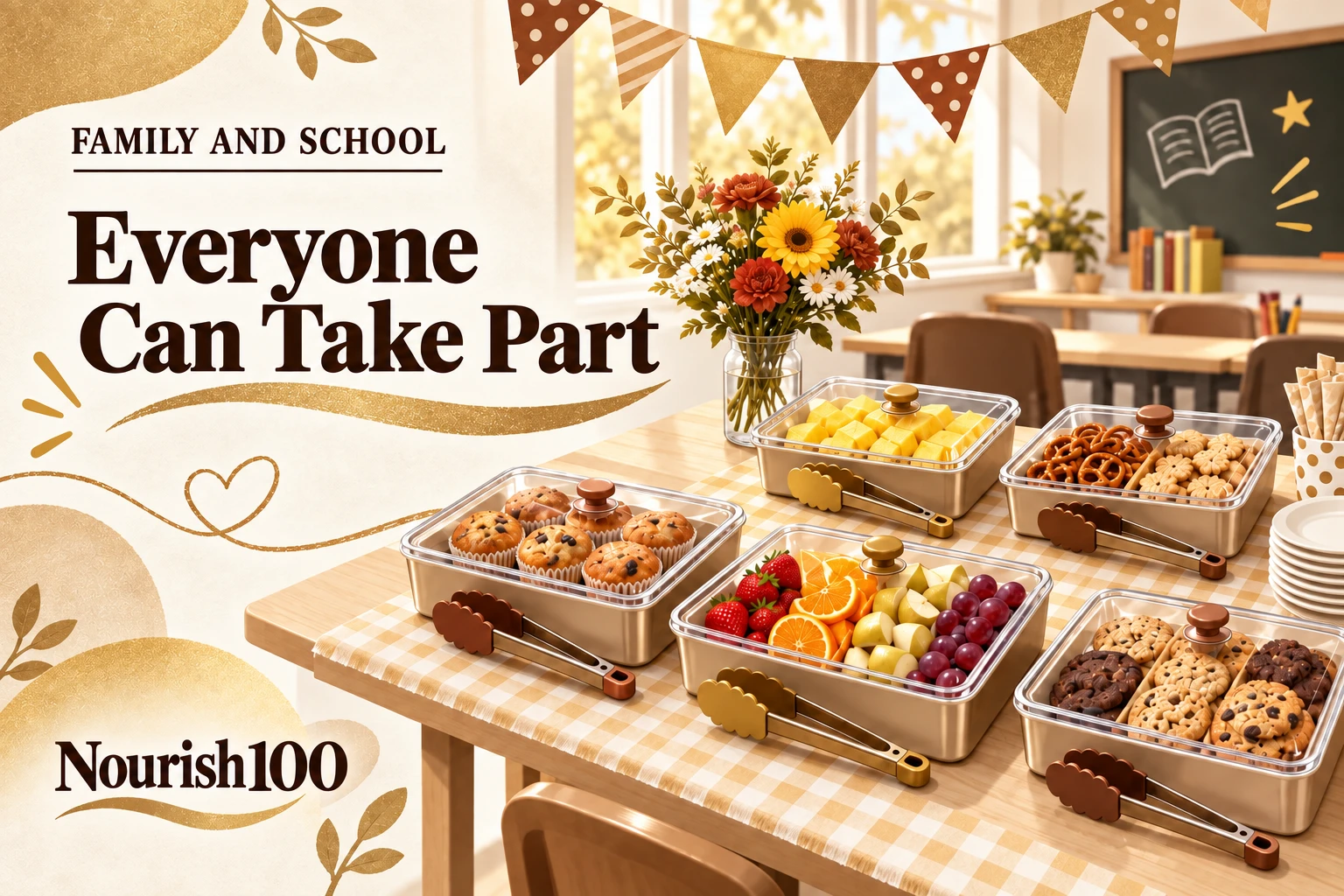
Think through what will happen during serving. Will the same tongs move between trays? Could food from someone's plate be returned to a shared platter? These are practical scenarios to discuss before the party, rather than problems to improvise around once everyone is eating.
The Centre for Food Safety recommends clear procedures to reduce allergen cross-contact during food handling. Schools and parents can agree the details for the individual situation, such as a designated adult serving food, clearly identifying a student's meal and keeping checked items separate during handling. Centre for Food Safety: Food allergy
Removing visible nuts from a cake does not establish that the remaining cake is suitable. Nor should anyone suggest “just a little taste” to find out. If suitability cannot be confirmed, use the alternative agreed beforehand rather than asking the child to take responsibility for a last-minute decision.
Inclusion does not mean everyone eats the same cake
A celebration can centre on a shared game, cards, class stories or a cooperative activity. These are suggestions for event design, not medical measures. They give children a way to join in that does not depend on all eating an identical snack.
If a student needs individual food, discuss a workable arrangement with the parent beforehand. The child should not arrive to discover that everyone else has something and they do not. When a parent supplies food, confirm where it will arrive, who will keep it and when it will reach the child. “Bring your own” leaves those practical questions unanswered.
Do not pressure a child into eating for the sake of appearing the same as everyone else. Saying no or asking to check with a parent should be accepted. Classmates do not need to persuade them to try it. A teacher can say, “This food is arranged for their needs; we can still enjoy the activity together.”
Agree emergency responsibilities before the event
Allergic reactions may involve a rash, swollen face or lips, or breathing difficulty. Severe reactions can involve narrowed airways, a sudden drop in blood pressure or loss of consciousness and require immediate emergency care. The school food-safety guide directs people to call 999 in Hong Kong for a life-threatening emergency. Centre for Food Safety: School food-safety guide, printed page 29
Before the activity starts, the responsible adults should know the school's emergency procedure: who calls for help, who looks after other students and how parents are contacted. This does not authorise every volunteer to make medication decisions. Individual medication and care arrangements must follow the established plan and school procedures.
If an allergic reaction is suspected, seek medical attention immediately and alert the responsible adult. Do not ask the child to put up with it or wait until the party finishes. In a life-threatening emergency in Hong Kong, call 999 immediately rather than only waiting for the organiser to act. This article is not a diagnostic tool. Centre for Food Safety: Food allergy Review what happened afterwards; an urgent situation is not the time to argue over which family brought the food.
Next step: one check before buying the snacks
For the next celebration, ask one designated organiser to check individual needs, food information and serving arrangements before purchases are made. If questions remain unresolved, change the option or activity rather than taking a risk to preserve the original menu.
The result should not be a claim of zero risk. It should be clarity: each relevant adult knows their role, uncertain items remain identified as uncertain, and children know whom to ask for help. Being prepared, including everyone and avoiding pressure are practical starting points.
Common questions
Is asking the whole class not to bring peanuts enough?
Not necessarily. Students can have different allergies. Ingredient information, handling and cross-contact also need to be considered; addressing one allergen is not the whole plan.
Can I just ask the child whether they have eaten it before?
Do not rely on memory alone. The responsible adult should use the information and individual arrangements checked beforehand. If unsure, clarify before serving.
Is homemade food from a parent automatically safer?
No. Its ingredients and handling still need to be understood. Without that information, do not claim it is suitable for a student with a particular allergy.
This article is for general health education only. It cannot replace diagnosis, medication adjustment or personalised treatment. If you have symptoms, a long-term condition, are pregnant, take medication or have questions about changing your diet, consult a qualified medical or nutrition professional.
Sources
- Hong Kong Centre for Food Safety: Food Allergy
- Hong Kong Centre for Food Safety: Food Labelling and Nutrition Labelling
- Hong Kong Centre for Food Safety: A Practical Guide for Ensuring Food Safety in Schools and Childcare Facilities
Health boundary
This article provides general education and does not replace a pupil’s medical or school allergy action plan. Difficulty breathing, swelling of the throat or tongue, a hoarse voice, persistent cough, dizziness, loss of consciousness, or symptoms affecting more than one body system require immediate action under the individual emergency plan and urgent medical help. Do not delay while searching online.
Evidence and sources
References
- Centre for Food Safety: Food allergy — 香港食物安全中心
- Centre for Food Safety: Food Labelling and Nutrition Labelling — 香港食物安全中心
- Centre for Food Safety: School food-safety guide, printed page 29 — 香港食物安全中心
An update may change wording or layout and does not mean every source has been re-reviewed. Guidance may change with new evidence. Check each original source’s date and intended population. Ask a qualified professional about your individual health circumstances.