Planning a school food donation drive: a collection and handover checklist
Before putting out a collection box, confirm what a receiving organisation needs and how handover will work. This guide helps students and teachers define roles, handle questions and record what actually happened, without turning donated items into unverified claims about community impact.
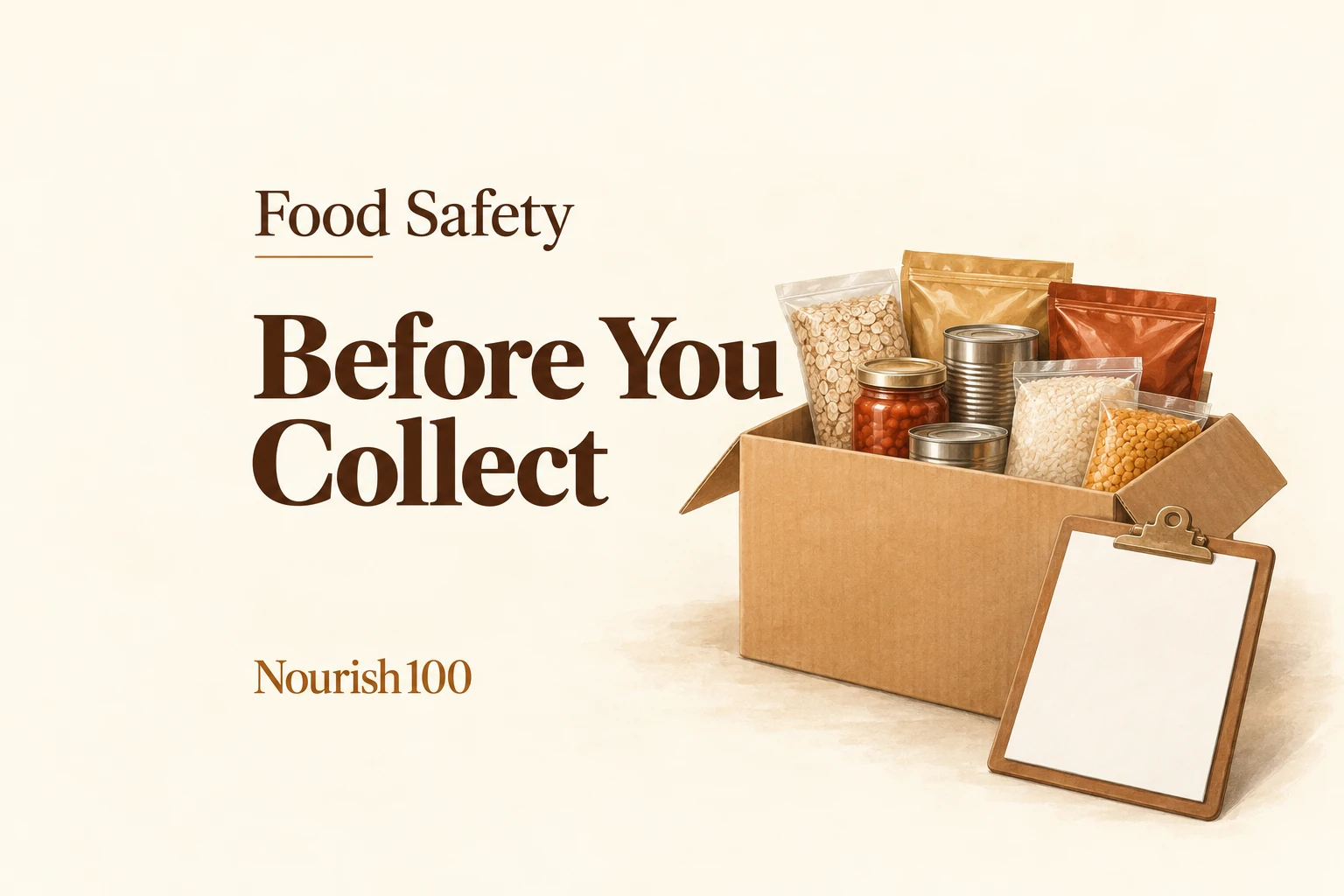
Find a willing receiving organisation, agree on the food, quantity and handover arrangements, and only then invite donations. For a first school drive, consider limiting collection to unopened, shelf-stable prepackaged food that the partner has agreed to accept. Do not add lunch boxes, chilled milk or homemade food at the last minute. This is a deliberately narrow planning suggestion, not a description of every food recovery programme.
Students should use this guide with a teacher or responsible adult. It is not a complete food-bank operating manual or a substitute for the receiving organisation's training. All situations below are planning examples, not claims that any named student, school or author has completed an activity.
Confirm the partner before designing the poster
Ask the adult lead to confirm what is needed, what is excluded, any remaining shelf-life requirement, the delivery window, the quantity limit and who will acknowledge receipt. Put the answers on one page and have the arrangements confirmed before recruiting donors.
The Centre for Food Safety describes public donations as generally involving intact, unopened, unexpired, shelf-stable prepackaged food, with acceptance differing between organisations. CFS: surplus food and safety
Avoid a poster saying that all food is welcome. If the partner has confirmed two categories, list those categories instead of adding similar-looking products yourself. Do not promise that every donated item will reach a recipient.
Separate student tasks from adult decisions
Students can explain the collection scope, count items, organise a rota and flag questions. The adult lead should handle exceptions, disagreements and communication with the partner. Agree in advance who can pause collection, rather than letting each volunteer make a different promise.
Try three roles: welcome donors, compare items with the agreed checklist, and prepare handover records. A small team can rotate. Avoid making one student carry boxes and answer every question at the same time. Cooking, repacking and tasting are not part of this proposed activity.
Pause when an item is uncertain
The CFS guide calls for packaging and label checks. It excludes food beyond its use-by date or with inadequate labelling, and explains the value of date records for inventory and traceability. Food recovery guide, pages 10–12
Students do not need to decide whether questionable food is still edible. If an item cannot be checked against the agreed requirements, stop acceptance and refer it to the adult lead under the partner's procedure. A donor's effort is not a reason to mix an uncertain item into a confirmed box.
An unreadable date, uncertain package condition or category outside the agreed list should remain unresolved, not be counted as accepted. This guide provides no taste-testing or shelf-life extension method. Normal appearance is not a safety guarantee.
Use a short record that follows the handover
The following is a team planning aid, not a replacement for the partner's traceability system. Use any additional format agreed with the organisation.StageWhat students can recordWhat confirms completionPlanningCategories, collection window and lead rolesTeacher and partner confirm the planCollectionProduct, item count, date marking and questionsChecks against the agreed list are completeHandoverBox number, contents summary, time and countReceiving organisation acknowledges receiptReviewDifferences, exclusions and improvementsTeam checks records and states limitations
Keep different date markings distinguishable rather than merging them for a neater spreadsheet. If counts disagree, recount together and explain the correction. Removing the original question simply to make a report look tidy does not resolve it.
A Hong Kong school scenario: collection runs late
Imagine that a vehicle expected after school is delayed and students need to catch their transport home. Decide beforehand which adult takes over, whether the temporary storage arrangement is suitable, and when collection must stop. Do not improvise by asking a student to take the whole box home.
If the school has no suitable space or person to take responsibility, reduce the time or quantity, or stay at the planning stage. A smaller scope can still be useful. It is easier to explain an agreed limit before launch than to invent arrangements after promising a collection.
Record service honestly, without guessing impact
Describe work actually performed: summarising partner requirements, planning a rota or resolving a count difference. Collected, handed over and distributed are distinct stages. Without confirmation, do not report either of the first two as the last.
Do not convert a box of food into an assumed number of households helped or claim improved health. A reflection can explain a decision, such as declining an item outside the agreed scope. A supported account of the process is more useful than an invented impact figure.
This example does not require recipient names, health information or family stories. Public documentation could show empty organised boxes, an anonymised checklist or a process diagram. Do not ask recipients to pose simply to demonstrate that service occurred.
Next step: complete one confirmation sheet
Write down what will be accepted, when, who handles exceptions and how handover will happen. Have the teacher and partner confirm the arrangements. If there is no partner yet, describe the work as a proposal, not an established collaboration.
After the activity, invite each volunteer to suggest one improvement and separately record which changes were implemented. Keep proposals and completed work in different columns when preparing a service portfolio. The site's editorial policy (Chinese) explains its general health-information boundaries; that policy page is currently in Chinese.
Frequently asked questions
Can we collect food first and find a partner afterwards?
That is not recommended. Confirm the partner's needs and arrangements before giving donors a collection checklist.
What if a classmate brings food outside the list?
Thank them and explain the agreed scope. Refer the matter to the adult lead rather than approving an exception yourself.
Can a large item count be reported as many families helped?
Not by assumption. Collection, handover and distribution require different evidence; unconfirmed impact should not enter the report.
Can a planned activity appear in a service proposal?
Yes, as a clearly labelled proposal. Do not describe a guide or future plan as completed volunteering experience.
Sources and health boundary
- Hong Kong Centre for Food Safety: Surplus Food – Keeping it Safe while Reducing Waste, July 2024.
- Hong Kong Centre for Food Safety: A Practical Food Safety Guide for Food Recovery Programmes, 2024 edition, pages 10–12.
This article is for general health education only. It does not replace diagnosis, medication adjustments or personalised treatment. If you have symptoms, a long-term condition, are pregnant, take medication or have questions about changing your diet, consult a qualified healthcare or nutrition professional.
Evidence and sources
References
- Surplus Food – Keeping it Safe while Reducing Waste — 香港食物安全中心 / Centre for Food Safety
- A Practical Food Safety Guide for Food Recovery Programmes — 香港食物安全中心 / Centre for Food Safety
An update may change wording or layout and does not mean every source has been re-reviewed. Guidance may change with new evidence. Check each original source’s date and intended population. Ask a qualified professional about your individual health circumstances.